Thursday, August 17, 2017
Why don't young people vote summary
The author of this article points out some stereotypes of young people, about being glued to technology, which in my opinion are accurate. It seems today that younger people especially are caught up in the day to day activities while completely ignoring the future. It has become a generation of people who certainly like to preach, but ignore the practice. One example of this is Colin kaepernick. He has become a controversial figure after choosing to kneel during the National Anthem in protest of racial issues in America. This certainly could be considered a valid point but it becomes ironic how he elects to kneel no problem, but he fails to vote in an attempt to elect the government he wants to fix these problems. Millennials seem to have an entitled attitude, and until that stops i believe they will continue to not vote.

Sunday, February 5, 2017
The Early Presence of Law and Order
 |
| Racine Police in 1880 |
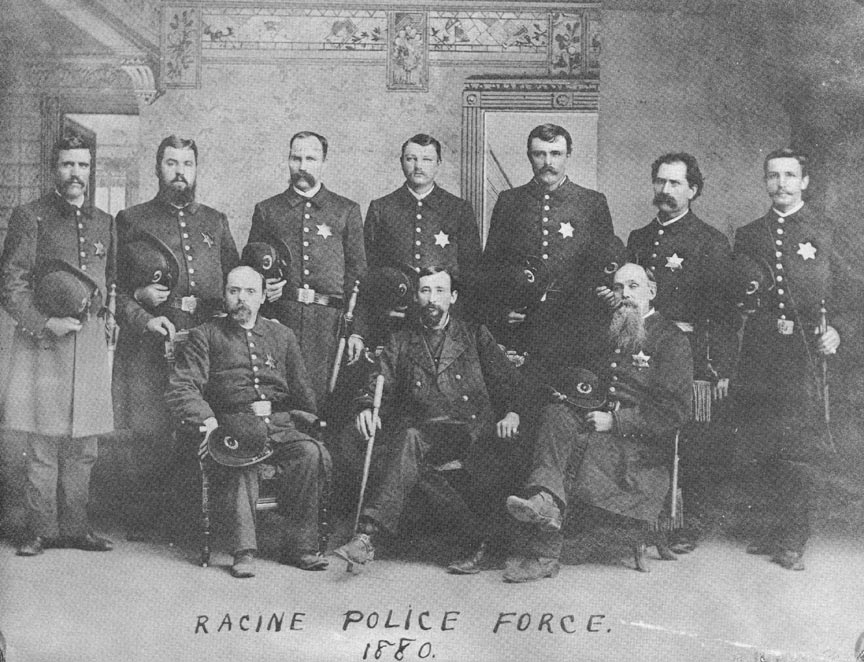
With the new developments in the field of technology work in the Industrial Age became more sedentary. Many workers were let of at 5, giving the citizens and early escape from the jail of a work day. This allowed more people to go home and enjoy leisure time. My father has always told me the more time I have on my hands, the more trouble I can get myself into. This was the case in this time of advancement and prosperity. Public disorder, drunkenness, and prostitution became popular offenses in this time period. The average number of arrests because of these offenses per officer was around 30 a year. Without the hard days of labor constantly shoved in the faces of the American citizens there was not much to do. Therefore mischief was a popular activity at the time.
 |
| A scene of Bootlegging. A common crime in the Industrial Age. |

distribution of alcohol in a city, it led to many other doors such as narcotics, prostitution, and
 |
| A replica of what a 1919 police car looked like. |

 |
| August Vollmer |
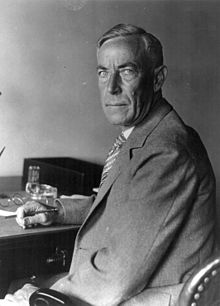
As the technology in the industrial age progres
sed, the use of machines not only helped the major tycoons, but also the police. Henry Faulds created the method of fingerprinting, which still to this day is a weapon of law and order(Policing in America). This machine allowed the policemen to now investigate crime scenes, and still have a chance of catching the criminal. Before this the only possible way for an arrest to be mad and justice to be served was if there was a witness present.
 |
| Secret Service in 1905 |
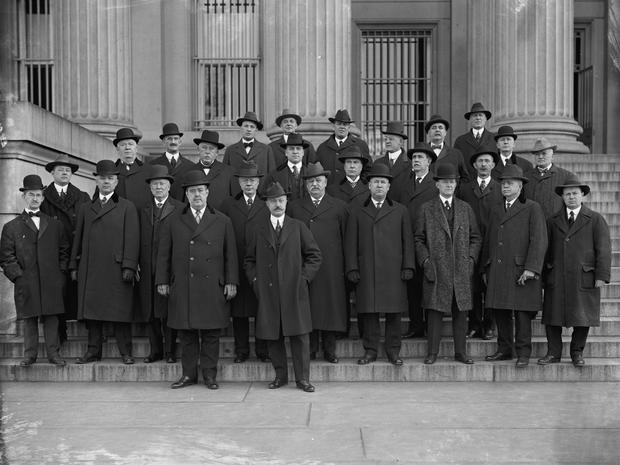
The Industrial Age came with many changes to the economy, cities, and social lives of the citizens with Untied States. As they changed, the police did too. It is human nature to find solutions and adapt to new environments. It is to no surprise that the men in blue changed with their society, as they continue to do today to help protect and serve the people of this country.
Citations:
Britannica
Public Service Photo Collection
History of Policing in America
Bartollas, Clemens, and Larry D. Hahn. Policing in America. Boston: Allyn and Bacon, 1999. Print.
Police in the Early 20th Century
LAPD 1900-1925
Friday, February 3, 2017
Urbanization and Organized Crime
During the late 19th and early 20th century people in America were moving from small towns and rural areas to large cities. These cities grew rapidly due to large amounts of immigration, and this created poor living conditions and crowded spaces. Crime became a way for immigrants to make money and they quickly formed large organizations. Without a developed police force and corrupt politicians gangs during this time were able to grow in size and power rapidly. The rapid urbanization in America lead to the development of organized crime which in return had a significant impact on urban life.
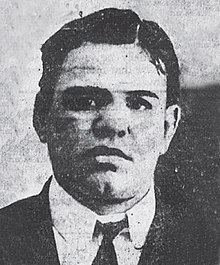
Organized crime was not created during this time period but did change drastically. Prior to 1870 smaller gangs such as the Whyos. The Whyos were mostly made up of petty thieves and would commit crimes such as punching someone for two dollars, breaking a bone for ten dollars, or even killing someone for one hundred dollars. The whyos finally dissolved around 1890. During the late 19th century large waves of immigrants were moving to the cities and creating gangs. These gangs were much more organized and were able to absorb the smaller gangs that had existed previously. NationalGangCenter.gov compared the development of gangs during this time period to the progress of commerce. Changing from individual stores to large stores with many different items available. Gangs such as the five points gang and the Monk Eastman Gang from New York quickly became powerful and were involved in counterfeiting, drug trade, prostitution, and racketeering. Antonio Vaccerelli "Paul Kelly" was the leader of the five points gang, Kelly grew his gang by creating youth groups as a front for getting kids involved with the gang. Monk Eastman leader of the Jewish gang in New York trained kids as pick pockets at the age of 10. These gangs were very organized and able to commit crimes on a much larger scale.
The Gangs also affected the politics and social landscape of cities. Both Eastman and Kelly wanted protection from the law in New York, so they began working with the corrupt politicians in Tammany Hall including Boss Tweed. With Backing from both of the largest gangs in New York the Tammany Hall political machine was very powerful. The gangs would have members at the polls to intimidate people into voting a certain way, they would also stuff the ballot boxes with fake votes. According to Historical Crimes by Wallace Edwards it was not uncommon for there to be three times the number of votes in the five points district than there were registered voters. In return the gangs were able to commit crimes without prosecution. Paul Kelly was arrested and should have gotten twenty years in prison but by the time of the trial his case had been manipulated so greatly that he only got 9 months. While sentencing Kelly recorder Goff said " You should have been convicted of highway robbery. Instead you were only convicted of assault." This partnership between the gangs and politicians helped shape city politics and urban life during this time period.
The way people viewed certain groups of immigrants was shaped by gang violence during this time period. In Los Angeles the Chinese immigrants had created gangs of their own called tongs. The Hip Sing tong and the On Leong tong were the most powerful tongs at the time. They would often fight for control over opium dens and brothels. The Hip Sing Tong had paid off most of the police force and the On Leong tong had political ties because they had rigged election of the district attorney. In 1900 a shootout started between the gangs in a tenement a woman and two children were injured, the police wrote this off as a gambling dispute and the woman and children were just collateral damage. The LA Herald, a Los Angeles newspaper, posted on July 19 1907 that seven men had recieved threats stating that tong wars were imminent, the newspaper claimed that the gangs had brought in the dreaded "Hatchet Men" and it said that any Chinese person found bearing arms could be arrested. The Chinese gang violence furthered the anti Chinese sentiment that already existed in this time period.
The rapid growth of cities between 1870 and 1915 lead to the development of large organized crime groups which eventually impacted city politics and the way people viewed immigrants. The large organized gangs created during this time period are similar to gangs in America today. The impact of gangs on cities during this time period helped shape urban life into what it is today.
Sources:
Organized crime was not created during this time period but did change drastically. Prior to 1870 smaller gangs such as the Whyos. The Whyos were mostly made up of petty thieves and would commit crimes such as punching someone for two dollars, breaking a bone for ten dollars, or even killing someone for one hundred dollars. The whyos finally dissolved around 1890. During the late 19th century large waves of immigrants were moving to the cities and creating gangs. These gangs were much more organized and were able to absorb the smaller gangs that had existed previously. NationalGangCenter.gov compared the development of gangs during this time period to the progress of commerce. Changing from individual stores to large stores with many different items available. Gangs such as the five points gang and the Monk Eastman Gang from New York quickly became powerful and were involved in counterfeiting, drug trade, prostitution, and racketeering. Antonio Vaccerelli "Paul Kelly" was the leader of the five points gang, Kelly grew his gang by creating youth groups as a front for getting kids involved with the gang. Monk Eastman leader of the Jewish gang in New York trained kids as pick pockets at the age of 10. These gangs were very organized and able to commit crimes on a much larger scale.
The Gangs also affected the politics and social landscape of cities. Both Eastman and Kelly wanted protection from the law in New York, so they began working with the corrupt politicians in Tammany Hall including Boss Tweed. With Backing from both of the largest gangs in New York the Tammany Hall political machine was very powerful. The gangs would have members at the polls to intimidate people into voting a certain way, they would also stuff the ballot boxes with fake votes. According to Historical Crimes by Wallace Edwards it was not uncommon for there to be three times the number of votes in the five points district than there were registered voters. In return the gangs were able to commit crimes without prosecution. Paul Kelly was arrested and should have gotten twenty years in prison but by the time of the trial his case had been manipulated so greatly that he only got 9 months. While sentencing Kelly recorder Goff said " You should have been convicted of highway robbery. Instead you were only convicted of assault." This partnership between the gangs and politicians helped shape city politics and urban life during this time period.
The way people viewed certain groups of immigrants was shaped by gang violence during this time period. In Los Angeles the Chinese immigrants had created gangs of their own called tongs. The Hip Sing tong and the On Leong tong were the most powerful tongs at the time. They would often fight for control over opium dens and brothels. The Hip Sing Tong had paid off most of the police force and the On Leong tong had political ties because they had rigged election of the district attorney. In 1900 a shootout started between the gangs in a tenement a woman and two children were injured, the police wrote this off as a gambling dispute and the woman and children were just collateral damage. The LA Herald, a Los Angeles newspaper, posted on July 19 1907 that seven men had recieved threats stating that tong wars were imminent, the newspaper claimed that the gangs had brought in the dreaded "Hatchet Men" and it said that any Chinese person found bearing arms could be arrested. The Chinese gang violence furthered the anti Chinese sentiment that already existed in this time period.
The rapid growth of cities between 1870 and 1915 lead to the development of large organized crime groups which eventually impacted city politics and the way people viewed immigrants. The large organized gangs created during this time period are similar to gangs in America today. The impact of gangs on cities during this time period helped shape urban life into what it is today.
Sources:
Information on political impact
Information on development of gangs
information on chinese gangs
information on monk eastman gang and paul kelly
Background information on urban life
Primary source on tong wars (July 19, 1907)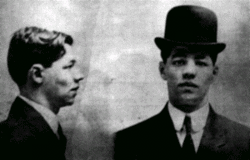 |
Paul Kelly  |
 |
| tenement housing |
 |
| Monk Eastman |
Tuesday, January 17, 2017
Peggy Wallace Kennedy
Today during our Martin Luther King Jr assembly Peggy Wallace Kennedy was our guest speaker. Her father George Wallace was the governor of Alabama three times and ran for president four times. Our speaker told the story of how her father ran for governor as a racial moderate and lost. He then ran as a racist and won. Peggy Wallace Kennedy was twelve years old when her dad gave a speech that encouraged segregation, and she was sixteen when her dad stood on the doorstep of the University of Alabama to try and stop the desegregation of the school. She talked about how her parents never discussed racial issues with her at home and how she felt like she needed to uphold her families reputation. She eventually realized that she could express her own beliefs and ideas against racism.


Thursday, December 15, 2016
Tuesday, December 13, 2016
Oakland Ghost Ship Fire
Jackson Vest
1) It was a warehouse that served as a sanctuary for collective artists.
2) There was an electronic dance party held in the Oakland Ghost Ship Warehouse. All of the plugs lead to the same socket and it overheated and caught fire.
3) There was no direct path from the stairwell to the exit leaving many trapped from the flames of the blaze.
4) The fire's are similar in the tragedy of the losses and how it affected the communities. The fires similarly both only had one exit.

http://www.cnn.com/2016/12/05/us/california-oakland-fire-ghost-ship-warehouse/

Monday, November 21, 2016
Jim Thorpe
 Jim Thorpe a member of the Sac and Fox Nation, of Oklahoma, was originally named Wa-Tho-Huk, which meant Bright Path. Him Thorpe lived up to his name as he managed to succeed in almost any athletic event he attempted. He was a natural born athlete and considered on of the greatest in the 20th century. His name is thrown into the conversations with some of the greats like Jesse Owens and Babe Ruth. He continued to succeed in ametuer sports, until his breakaway event in the 1912 Olympics winning multiple medals. He was soon welcomed by the US for his contributions to the success of the nation, also he was a benchmark for the developing in Native American equality. Although, the country in the turmoiled state with the racism and hate that surrounded the white americans, they found a technicality. They stated since he was paid to play ametur baseball that he was to be stripped of his medals. This did not set back his career, as he continued to succeed in playing in the professional baseball league and finishing his career with a .327 batting average, which is very impressive. He also joined what was soon to be the NFL, and with an astonishing career, he was soon too be electing the first president of the league. As his career declined because of age, he found it hard to make money and suffered the hard tragedy of alcoholism. This was not what defined Jim Thorpe, as he was nominated after his death as "The Greatest Athlete for the First Half of the Century". While winning medals in the Olympics, getting inducted into the NFL Hall of Fame, and playing multiple sports professionally I think it is safe to say he is an accomplished Native American. He changed the face of how Americans can view Indians, by succeeding in almost everything he did.
https://en.wikipedia.org/wiki/Jim_Thorpe
This site gives basic information about Jim Thorpe. I feel it will be good to give his heritage, and his background to help explain why he was considered an accomplished Native American.
http://www.espn.com/classic/biography/s/Thorpe_Jim.html
This is Jim Thorpe's biography on ESPN Classic's. It is a site for acclaimed professional athletes and their accomplishments. I feel like this will give me the facts of his accolades throughout his athletic career.
http://www.inquiriesjournal.com/articles/15/redskin-and-all-american-jim-thorpes-malleable-symbolic-significance
This article oversees Jim's entire career including acting, and explains why he was a benchmark for native american equality. I feel like the ideas in this article will help me build strong opinions that i can back up with factual evidence.
Wednesday, October 1, 2014
Alexander the almost Great
Question 1- Does Alexander deserve to be called "great"?
Alexander "the Great" was a great general for his time. Alexander the great otherwise known as Alexander III of Macedon took over for his father Phillip after Phillip's assasination. Alexander conquered the entire Persian empire, something no other man had ever done, or ever did. Alexander also did this without losing a single battle, making this feat even more impressive. The Persian empire, despite having great numbers for their military, had no great generals on the levels with Alexander. A persian general, Memnon, died of illness early into Alexander's career, so Alexander never truly faced a test, and was always facing inferior generals. The tactics used by Alexander were revelutionary, he liked to have a phalanx which is a formation of infantry soldiers where each soldier is carrying a spear around 20 feet long. These soldiers created a wall of spears so if enemy soldiers came near, they would not survive. These tactics, as they had not been seen before, would strike fear into the enemy, already giving Alexander and his army an advantage. Aleander loved to flank his opponents while using the phalanx to distract his opposition. However, one has to think would he have won a battle against the likes of Napoleon Bonaparte, Genghis Khan, or Julius Caesar? Is Alexander really great? The answer to this is simply no, if there was other generals with the stature of Napolean Bonaparte to test himself against then the answer might be yes, but since he never faced a truly great force, there is no proof that he is great.
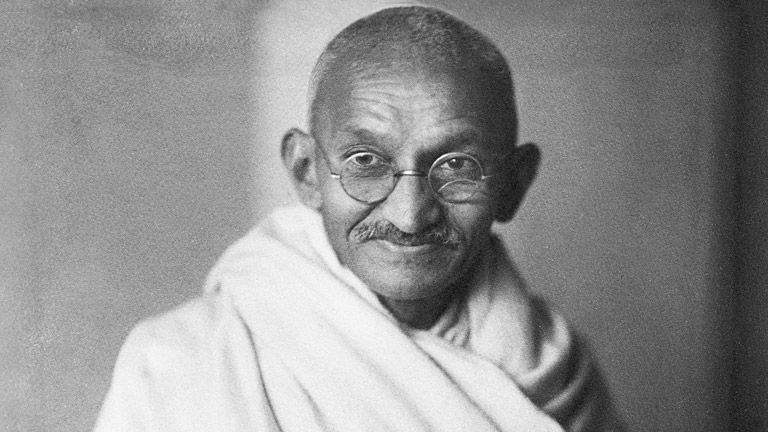 |
| Mahatma Gandhi |
Greatness is a tricky word to define, according to dictionary.com, great has an astounding 23 different definitions. Society sees greatness as a word to describe someone that has done something wonderful, but to not do it by vicious means. Society appreciates someone that is ethical in the way they run things. Such as someone like Gandhi, who held peaceful protests, instead of leading people to violence to fight for their indepenence. This shows society does not value violent actions and is a peaceful group. It seems as if when someone dies they want to be rembered for something, and every single person wants to be great in some way. So society is also a very selfish and greedy group.
Question 3- Do time and distance impact someone's popular perception?
Time and distance do alter someone's popular perception, someone could do something great today, but still not get as much recogniton if it happened 20 years ago, or even 2000 years ago.
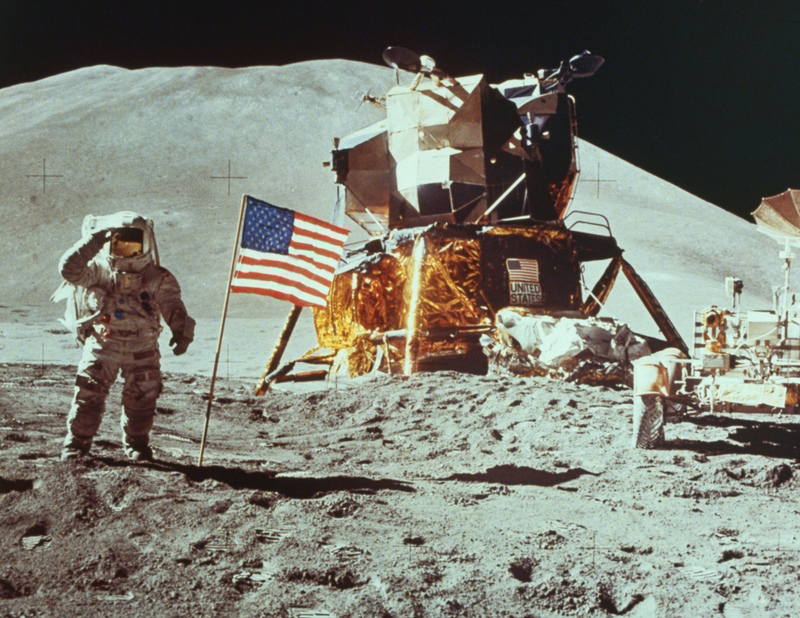 |
| Moon landing |
Works Cited
"Alexander the Great." Alexander the Great. Web. 30 Sept. 2014.
"Alexander the Great." World History: Ancient and Medieval Eras.
ABC-CLIO. Web. 26 Sept. 2014.
<http://ancienthistory.abc-clio.com/Search/Display/575648?terms=alexander+the+great>.
BBC News. BBC. Web. 29 Sept. 2014.
<http://www.bbc.co.uk/history/historic_figures/alexander_the_great.shtml>.
Bio.com. A&E Networks Television. Web. 01 Oct. 2014.
Fox, Robin Lane. Alexander
the Great. New York: Dial, 1974. Print.
Green, Peter, and Peter Green. Alexander of Macedon, 356-323 B.C.: A Historical Biography.
Berkeley: U of California, 1991. Print.
"How Great a General Was Alexander?" Forbes. Forbes Magazine. Web. 01 Oct.
2014.
Moulton, Carroll. Ancient Greece and Rome: An Encyclopedia for Students. New York:
Scribner, 1998. Print.
Sienkewicz, Thomas J. Encyclopedia of the Ancient World. Vol. 1. Pasadena, CA: Salem,
2002. Print.
Was Alexander Great?
1 In my opinion Alexander of Macedonia does not deserve to be called great. He is often perceived as great because he had a lot of military success conquering Greece, Persia,and parts of Asia and Africa, but some of his success can be credited to the other empires being weak at the time. Also Alexander’s army was very technologically advanced, they had huge phalanxes each person armed with a 18 foot spear. This allowed him to easily weaken an army and then send his cavalry in to finish them off. Alexander was often seen as a brave leader in battle but I believe some of his foolishness was mistaken for bravery. I say this because according to the article "How Great was Alexander" many of his decisions were made thinking of romanticized figures such as Achilles and Heracles, and in real life some battles may not turn out like the legends. According to Encyclopedia Britannica Alexander tried to enforce racial fusion in order to create a Persian-Macedonian master race. However this plan did not work and his empire split into three empires right after his death. Alexander's personal life was thought to be one of a hero but actually he was just full of himself. "The first 3000 years states that Alexander saw himself not as the son of Philip of Macedonia but actually the son of a demigod. Alexander also was very paranoid about assassinations according to Encyclopedia Britannica Alexander would execute anyone he did not see as trustworthy without a fair trial. After Alexander conquered Persia he pursued after Darius th eking of Persia and once he had learned that someone else had killed Darius he killed them for stealing his opportunity. In reality Alexander was a self absorbed, greedy leader.
 |
2 Society views greatness as making an impact on the world. Most of the time people are considered great for doing good deeds but sometimes the moral of the action is forgotten and only its impact is remembered. A good example of this is Alexander the Great, he took his army through Asia and Africa defeating any army that stood in his way, but along the way he slaughtered natives and burned cities yet he is still called Alexander the Great. I believe Alexander is called great because he became famous for conquering lots of land and history books, biographies, and novels focus more on Alexander the great general and less on Alexander the self absorbed, money spending king.
3 Often popular perception is affected by time and distance. As time goes on it seems that insignificant events are forgotten and significant events are embellished. A lot of times people get information through stories being told, but sometimes people add things to the story that may not have actually happened in order to make the story more interesting. One common way this is done is through movies and plays. According to “How Great was Alexander” a great deal of exaggerating was done in Plutarch’s “On the Fortune or the Virtue of Alexander” and in “Alexander Romance”. One story in “Alexander Romance” even suggested that he turned into a Mermaid.
Distance can also affect someone’s perception of a person or event. If someone is too far away from an event to witness it for themselves the only way they could know about it is to hear it from someone else. When someone tells a story sometimes their information is incorrect and as the story gets told over and over again the information gets farther and farther from the truth. This happened in Macedonia while Alexander was away at battle.
Work Cited
"Britannica School." Britannica
School. N.p., n.d. Web. 28 Sept. 2014.
Falls,
C. B. The
First 3000 Years: Ancient Civilizations of the Tigris, Euphrates , andNile River Valleys, and the Mediterranean Sea. New York: Viking, 1960. Print .
"How "Great" Was Alexander? [P.1]." How
"Great" Was Alexander? [P.1]. N.p., n.d. Web. 30 Sept. 2014.
Sienkewicz, Thomas J. Encyclopedia of the Ancient
World. Pasadena, CA: Salem, 2002. Print.
"Alexander the Great." Merriam-Webster.
Merriam-Webster, n.d. Web. 29 Sept. 2014.
Subscribe to:
Posts (Atom)